Peptide Vendors Are Publishing Searchable COA Databases
Some peptide vendors now publish searchable COA databases with batch-level lab results. Real Peptides offers 157 certificates across 82 compounds.
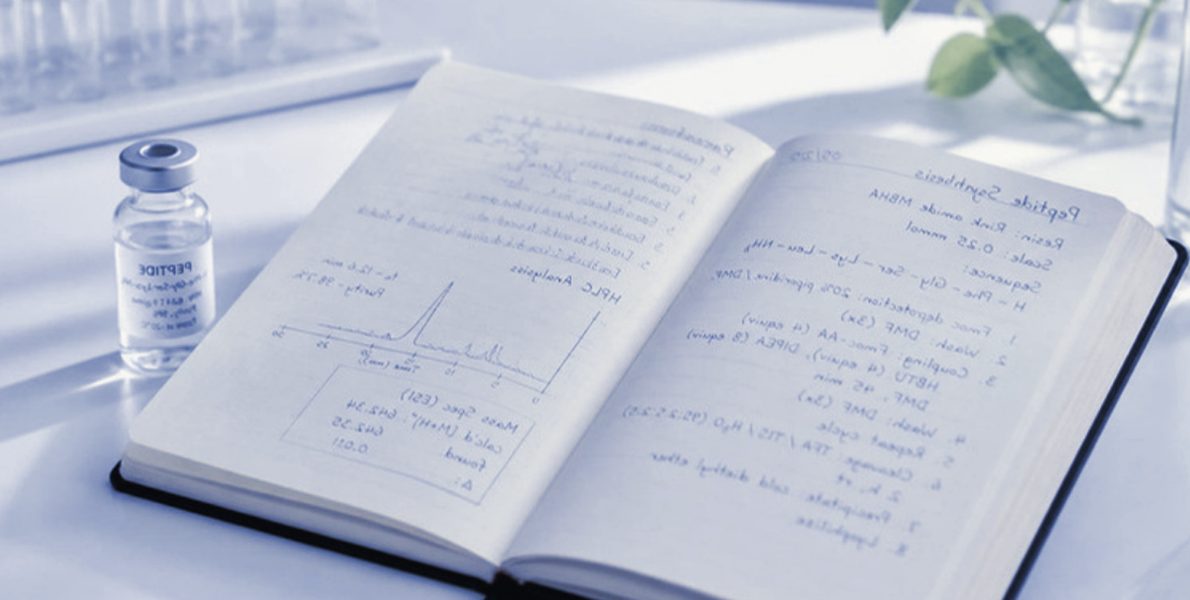
Three years back, to find a Certificate of Analysis for a research peptide would require sending an email to a vendor and waiting for days for a PDF. Now, this process is changing. There are a few peptide vendors that have a searchable online database that allows customers to find the COA results based on the compound, the batch number, or the date before they place an order. This shift is important because it transforms the verification from a trust-based process to a data-based one. We analyzed how these peptide COA database systems function, what vendors worked on creating those systems, and what that means for purchasing BPC-157 or other related peptides in 2026.
What a COA Database Looks Like
A COA database is a library of Certificates of Analysis that you can search through on the web. In place of just one generic PDF attached to each product page, the COA database will organize all certificates according to compound name, production batch number, and date of analysis. The COA database usually contains the HPLC chromatogram that shows the purity profile of the peptide, the purity %, the results of any endotoxin screening in endotoxin units per milligram, and mass spectrometry information confirming the molecular identity of the compound.
The practical benefit is obvious. If a person wants to look for a BPC-157 COA, he can search for it by a lot number, see the exact HPLC trace for that batch, ensure that the purity figure coincides with the purity number that can be found on the product page, and check the acid levels. All of this is done prior to paying. The distinction between this method and a static PDF is similar to the difference between a library catalog and a photocopy of a printed page of a book.
Not all vendor databases are equally useful. Some may contain certificates but no search tool. Others may show purity levels but no chromatogram or mass spectrometry data. The best solutions provide full raw analytical data, including lab information, and associate the certificate with a specific batch rather than a product's SKU. That batch specificity makes a real transparency tool different from a marketing page in a lab coat.
Real Peptides COA Library -- 157 Certificates Across 82 Compounds
At present, Real Peptides makes available 157 Certificates of Analysis covering 82 unique substances. The database may be accessed via the main site navigation as well as the individual product pages. With regards to testing, there are two independent laboratories involved in the operations: Freedom Diagnostics and Kovera. When it comes to BPC-157 specifically, testing through HPLC has been showing consistent purity results of 99% or higher across the published batches. In terms of the time of endotoxin screening, testing results are below 0.1 EU/mg being well below what is accepted for pharmaceutical preparations. TheFDA's guidance on bulk drug substances used in compounding gives all the details about what standards are expected for the different compounds being used in preparation and removing endotoxins is one of the core things about that standard.
Every certificate in Real Peptides' library refers to a certain batch of production. This means that if a buyer gets a package with a lot number such as RP-BPC-2026-047, the buyer can search the database for that particular lot and check the HPLC trace and mass spectrometer data for confirmation. This is an important point here because if a COA was reused for various shipments in six months, it gives no information about that specific vial a buyer has.
Conversely, PeptideGod has not included a Certificate of Analysis at the BPC-157 product page as of October 2026. There are no testing facilities mentioned, purity information given, or relevant batch documents made available to the public on the website. Although this does not prove anything in relation to the quality of the product, it does indicate that there are no peptide lab results accessible to customers prior to purchasing.
The table shows the COA documentation methods we witnessed among various vendors in October 2026.
| Vendor | COA Count | Compounds Covered | Labs Named | Searchable? |
|---|---|---|---|---|
| Real Peptides | 157 | 82 | Freedom Diagnostics, Kovera | Yes |
| PeptideGod | 0 (not published) | N/A | Not disclosed | No |
As more vendors develop similar documentation systems, we will include them in this table. At this time, the distance between them shows a larger industry divide between the companies which do publish and those which do not.
Why Batch-Level Transparency Matters for Buyers
Peptide production is not entirely uniform. Different production batches of the same peptide can generate slightly varying purity levels, the levels of residual solvents, and the levels of endotoxins at the end of their synthesis. For example, the purity level of a batch produced in March can be 99.2% while the one produced in June is at 98.7%. Both numbers are acceptable but are still not the same. By having batch-level certificates of analysis (COAs), the buyer is able to check the actual vial that he or she is receiving instead of having to rely on a single historical test that may not represent the current shipment.
Unlike many other consumer product types, this means more in the peptide subject market since there is no regulatory organization ensuring consistency. BPC-157 is not a drug approved by the FDA. It is simply sold for research, and it is up to the manufacturer and the purchaser to ensure quality control. Studies on BPC-157 (Sikiric et al., 2018) were conducted with the peptide obtained in a laboratory under controlled conditions; other scientists must also follow this guideline.
Industry-level data adds context. Estimates from peptide community audits suggest that roughly 80% of vendors claim to publish Certificates of Analysis in some form, but only about 30% of those are independently verifiable, meaning the COA names a real laboratory, includes a batch number that corresponds to a specific production run, and displays raw analytical data rather than just a summary number. The remaining 70% fall into a gray zone of generic documents, unnamed labs, and reused certificates. A searchable BPC-157 COA database with named labs and lot-specific entries sits firmly on the verifiable side of that divide.
- 157
- Certificates published by Real Peptides
- 82
- Distinct compounds covered
- 99%+
- HPLC purity for BPC-157 batches
- <0.1 EU/mg
- Endotoxin level per BPC-157 lot
- 2
- Independent labs named (Freedom Diagnostics, Kovera)
- ~30%
- Vendor COAs that are independently verifiable
If you're a purchaser who is evaluating suppliers prior to purchasing, our guide to buying BPC-157 online safely in 2026 explains precisely the evaluation framework we have used, which includes scoring criteria used to assess COA.
What More Vendors Should Adopt
Providers providing searchable COA databases still seem to be exceptions to the rule. The majority of peptides vendors simply make available a PDF file, issue certificates only when requested, or ignore the process altogether. If there is an intention to create the market where buyers can base their choices on analytical information, it is necessary to widely implement a number of practices.
To begin with, having searchable database that can be filtered by compound and batch is essential. A flat list in form of multiple PDFs is infinitely better than a blank space, but buyers may still need to sift through multiple documents to arrive at the right one. A search tool that enables customers to search by lot number or compound name is the easiest way of addressing this issue.
Secondly, it is essential to focus on batch-specific results instead of product-level summaries. Providing a single COA for BPC-157 for an unlimited duration does not imply transparency. It is required that each batch of payment has its own certificate which is tied with that particular payment. Such an approach is in line with pharmaceutical principles, and peptide supplier does not have any other reason for not achieving certification this way.
The third point is that laboratories need to be named. A COA that does not include the name of the testing laboratory is not independently verifiable. By naming the laboratory, it makes it easier for the buyers to reach out to the laboratory and confirm that the certificate is valid, in addition to checking that the laboratory is accredited in relation to the specific analytical procedures. We have seen COAs that do not provide the name of the laboratory, and in such cases the COA does not carry more weight than the vendor's word alone.
Fourthly, vials may have QR Codes attached to their labels pointing to related certificates. This helps to bridge the gap between physical goods and documentation in the digital world. The customer scans to code and reaches the COA of that lot to ensure purity and authenticity without having to check the vendor's website. It is one minor feature with a major payoff in terms of the trust relationship between the seller and the customer. Payment infrastructure is getting updated parallelly with the transparency solutions. Our coverage of how payment processors are tightening rules on peptide sales in 2026 shows that several vendors are changing their checkout processes at the same time they are working on COA infrastructure.
These procedures do not need unique technologies or substantial investment. The service provider who has already invested in testing by an independent party owns the basic information. The main issue is the choice to make this information publicly available. Conditions during storage influence the results of any COA. Certificate with the 99% purity report is about nothing if peptide was stored improperly before the shipment. In our guide on BPC-157 storage temperature before and after reconstitution you may find the standards of handling that can save the quality of COA.
FAQ -- Peptide COA Databases
Can I look up a BPC-157 batch COA before buying?
Yes, COA databases which contain searchable COAs list merchants in the marketplace. However, Real Peptides provides buyers with an ability to search for compounds and lot numbers prior to purchasing; every BPC-157 batch must be linked to a corresponding certificate demonstrating hplc and endotoxin results. However, vendors which do not maintain published databases must rely on either emails for documentation or product pages that provide no documentation whatsoever.
Which peptide vendors have searchable COA libraries?
Real Peptides is the best-documented instance we examined, with 157 certificates available for 82 compounds in a search-enabled database. Other suppliers usually limit their documents to static PDF files, give only the CoA when requested, or don’t provide any test results. Audits of vendor documentation contained in this site will be updated as new information is obtained.
What labs do peptide vendors use for independent testing?
Freedom Diagnostics and Kovera have been identified as the labs used by Real Peptides. Several businesses in the marketplace are known to use labs such as Janssen, Intertek, and several other CLIA certified labs, but many of these companies do not make this information public. The presence of a lab's name in a COA is one of the most convenient ways to confirm that the COA is authentic, as clients can contact the lab directly to ask whether the COA is authentic.

Keep reading
Payment Processors Tighten Rules on Peptide Sales in 2026
Payment processor restrictions affecting online peptide vendors in 2026. Which gateways flag research chemical merchants and what BPC-157 buyers should expect.

BPC-157 Storage Temperature — Before and After Reconstitution
Store BPC-157 lyophilized powder at room temperature and reconstituted solution refrigerated. Stability data, shelf life and transit tolerance explained.
Research Peptide Market in 2026 — Size and Growth Trends
The global research peptide market in 2026. Market size estimates, online vendor expansion and how regulatory pressure affects BPC-157 availability.
Compare the current picks
Prices, sizes and ratings side by side, updated when the merchant pages change.
Shop BPC-157