BPC-157 Scam Prevention — Spot Fake Peptide Sellers
How to identify fraudulent BPC-157 sellers online. Red flags, a verification checklist and safety rules for research peptide purchases.
Approximately one out of every three peptide stores that we surveyed in October 2026 did not have a Certificate of Analysis available on its site, nor any mention of a testing lab or a contact address anywhere on the website. However, some of these stores ranked on the first page of Google for the term "bpc 157 scam". The distance between visibility and credibility is where the problems lie for the consumers. This article explains the particular warnings, methods for confirmation, and techniques that differentiate a fake bpc 157 store from a real one. We developed this article based on the same criteria we use to rate suppliers.
Why Scam Peptide Stores Exist
BPC-157 occupies a regulatory gray zone. It has no FDA approval for human use, no standardized retail framework, and no mandatory third-party testing requirement. The FDA's consumer safety updates warn that products marketed outside approved channels often lack quality controls that prescription drugs must meet. That vacuum creates an opening for fraudulent sellers. Setting up a peptide storefront costs less than $200 on most e-commerce platforms, and there is no barrier to listing products without any testing data behind them.
Demand is the other half of the equation. BPC-157 appears in over 100 preclinical studies (Sikiric et al., 2018), and online communities drive steady search volume for terms like "bpc 157 legit" and "where to buy bpc-157." Scam operators target those queries because the buyers behind them are already motivated. They build storefronts that mimic legitimate vendors, run paid ads, and rely on the fact that most first-time peptide buyers don't know what verification looks like. Understanding the broader research peptide market in 2026 helps explain why these operations are profitable enough to persist.
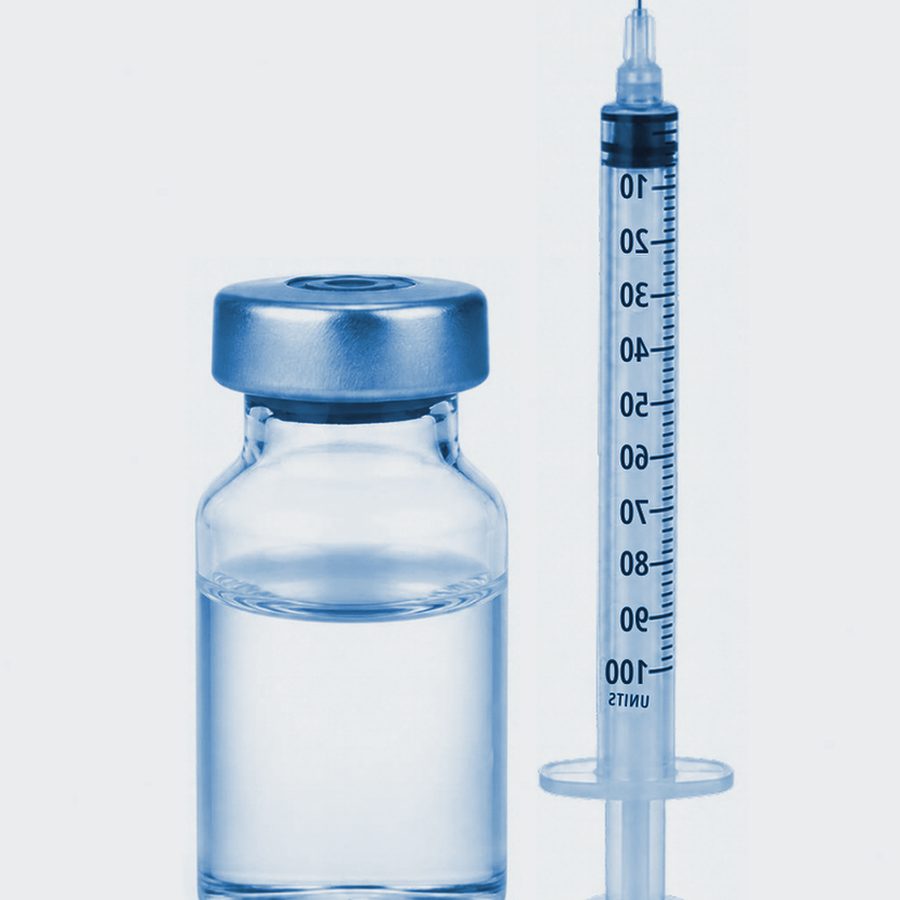
Red Flags on a BPC-157 Product Page
The greatest resource for determining the reliability of a supplier is a product page. The table given below lists down all of the warning signs that we look out while assessing any BPC-157 listing. If a site gets two or more of these red flags, we immediately avoid it.
| Red Flag | What It Looks Like | What to Do Instead |
|---|---|---|
| No Certificate of Analysis | Product page has no link to a COA, or says "COA available upon request" without providing it | Only order from stores that publish lot-specific COAs before checkout |
| No vial size in milligrams | Price is listed but the amount of peptide per vial is missing, making cost comparison impossible | Calculate price per milligram before comparing any two products |
| Stock photos for product images | Generic laboratory vial images that appear on multiple unrelated stores | Reverse-image-search the product photo to check if it appears elsewhere |
| "Pharmaceutical grade" claims | Marketing copy states the BPC-157 is pharmaceutical grade or FDA approved | Recognize that no BPC-157 product has FDA approval; this claim is false by definition |
| No contact information | No email, no phone number, no physical address on the site | Require at least one verifiable contact method before placing any order |
| Domain registered within the last 60 days | A WHOIS lookup shows the store appeared very recently with no web archive history | Check domain age through a WHOIS tool and look for archived versions of the site |
| Prices far below $3 per milligram | BPC-157 listed at a fraction of market rate with no explanation for the discount | Compare against known market pricing of $4 to $7 per milligram for research-grade peptide |
There’s a lot of overlap among these red flags. A company without a Certificate of Authenticity also typically does not provide a contact address and resorts to using stock photographs.
The Verification Checklist Before You Order
Prior to making an order from any peptide supplier, go through every step mentioned in the preceding section one by one. Omitting even one of these may expose you to a bpc 157 scam. We also follow a similar process while evaluating suppliers for our guide to buying BPC-157 online safely in 2026.
- Check the domain age and contact information
- Look for a published COA with batch numbers
- Confirm the payment gateway is secure
- Search for independent mentions of the store
Check the Domain Age and Contact Information
Run the store's URL through a WHOIS lookup. A domain registered fewer than six months ago that sells research peptides is a significant risk. Legitimate vendors tend to have domain histories stretching back at least a year, often longer. Next, look for a contact page. A real address, a working phone number, or a support email that responds within 48 hours are baseline requirements. If the store lists only a contact form with no other information, proceed with caution. Anonymous storefronts are easier to abandon after collecting payments.
Look for Published COA with Batch Numbers
A Certificate of Analysis should be accessible from the product page before you add anything to your cart. The document needs to include HPLC purity data, a named independent laboratory, a lot or batch number that matches the product listing, and a date of analysis. Mass spectrometry confirmation of the peptide's molecular weight (approximately 1419.5 daltons for BPC-157) adds another layer of assurance. If the COA is a generic document with no batch number, or if the same COA has been reused across multiple product pages for months, it offers no real verification. The known amino acid sequence of BPC-157 makes identity confirmation through mass spec straightforward for any competent analytical lab.
Confirm the Payment Gateway Is Secure
Make sure to ensure that the checkout page is protected with HTTPS encryption, and ensure that payment processor is one with a good reputation. Any store that takes you to an unknown third-party payment site, accepts only payments in cryptocurrency, or requires you to transfer funds to a private bank account presents a threat. Usually, reputable vendors use established processors to accept payments, which allows customers to get their money back if they are scammed. More information on this topic can be found in our BPC-157 payment safety guide.
Search for Independent Mentions of the Store
Use online discussion platforms, including forums, Reddit, and review aggregation websites, to find any mentions of the store that aren’t included on its website. Any store that can only be found in its marketing materials and paid advertisements can't be trusted. Be suspicious of product reviews that all appear in exactly the same words or have been published at very similar times. Real users learn only through long-term experience with the product.
Common Tactics Fake Stores Use
The scam peptide sellers employ a consistently consistent playbook over the course of many years. This crucial knowledge can save consumers a lot of money and reimburse them if they ever encounter bpc 157 products in question.
Copied Product Photos and Descriptions
Counterfeit establishments often steal product photographs directly from reputable suppliers. In such images, vials with high-quality labels, proper packaging techniques, and tags from another company may be spotted. Some are even more daring by taking full descriptions of these products. An image search on Google usually provides the original source. If identical images of the same product are from three or four different sites with no brand names, then at least one of the sites in question can be assumed to be fraudulent.
Fake Countdown Timers and Invented Reviews
Urgency mechanics are a hallmark of scam storefronts. A countdown timer claiming "only 3 vials left" or "sale ends in 2 hours" resets every time you reload the page. Invented reviews follow a pattern too: five-star ratings with generic praise, posted in clusters, often with reviewer names that read like placeholder text. Legitimate stores accumulate reviews gradually, and those reviews tend to mention specific details like shipping speed, vial packaging, or reconstitution experience. Generic praise without specifics is a signal that the feedback was manufactured.
Prices Far Below Market Average
Research-grade BPC-157 typically costs between $4 and $7 per milligram from US-based vendors with published testing. A store listing the same peptide at $1.50 per milligram or less, with no explanation for the discount, is either selling underdosed product, mislabeled product, or nothing at all. Deep discounts do exist during legitimate clearance events, but those are accompanied by visible batch information and expiration dates. A permanently rock-bottom price with no COA is not a bargain. It is a warning. For context on how shipping costs factor into total price, see our BPC-157 shipping times and vendor delivery comparison.
What Legitimate BPC-157 Stores Look Like
Understanding the characteristics of a legitimate vendor is equally important as knowing those of a rogue. The following table outline is used as a quick guide for gauging the credibility of any peptide supplier. A legitimate bpc 157 vendor will ideally meet all the specifications of the left column.
- Published COA with batch numbers
- Yes vs No
- Named third-party testing lab
- Yes vs No
- Contact page with real address
- Yes vs Anonymous
- Secure payment gateway (HTTPS)
- Yes vs HTTP or redirect
- Prices near market range ($4-$7/mg)
- Yes vs Under $2/mg
A store that meets all legal requirements is by no means assured of producing a quality product, but it provides you with a way to check what you purchase. A store that violates many requirements of suspicions offers you nothing constructive. We use this criterion in every review of suppliers on this site, and we notice the same tendency: transparency is the best indicator of quality products.
FAQ -- BPC-157 Scam Prevention
How do I check if a peptide store is legitimate?
To begin with, carry out a WHOIS search to ascertain if the domain has been registered for a minimum of six months. Determine whether the establishment publishes lot-specific Certificates of Analysis associated with a listed independent laboratory. Verify the presence of a contact page that provides an authentic address or phone number. Search for the name of the store on third-party websites and discussion boards to find if genuine customers have expressed their opinions.
What does a fake BPC-157 COA look like?
A fake COA typically lacks a batch or lot number, omits the name of the testing laboratory, or reuses the same document across multiple products and batches. Some fabricated COAs display purity figures without specifying the analytical method (HPLC, mass spectrometry) or testing date. Cross-reference the lab named on the document to confirm it exists and performs peptide analysis. The FDA has issued warning letters to companies making unsubstantiated claims about unapproved products, and fabricated testing documentation falls into similar territory.
Is a very low BPC-157 price always a scam?
Even though this does not always occur, it is still something worth looking into in further depth. Normally, genuine suppliers do have clearance sales on products that are near their use-by date, with the corresponding prices being indicated by lot number as well as their expiration dates. In contrast, having a price that is low throughout, without any certifying documentation to prove its authenticity makes for an entirely different story. Generally, one can get a good quality BPC-157 which has been verified using HPLC and which frequently ranges between $4-$7 per mg. However, anything that costs less than $2 per mg may be responsible for a number problems including its low activity, deterioration, or being mislabeled.
What should I do if I was scammed buying BPC-157?
Make sure to get in touch with your credit card provider and start the process of the chargeback. Make sure you have documentation – any confirmation receipts you received from the seller, screenshots of the product pages, etc. You should also report the seller to the FTC at reportfraud.ftc.gov and your state attorney general’s office Let them know. If you used cryptocurrency to make the payment, it might be even harder to get your money back since those payments are usually irreversible.
Are there public databases for checking peptide vendors?
There is no single centralized database for peptide vendor verification. However, the FDA's warning letters database lists companies that have received enforcement actions for selling unapproved products. Independent peptide community forums maintain vendor review threads where buyers share testing results and order experiences. Cross-referencing multiple sources gives a more complete picture than relying on any one list.

Compare the current picks
Prices, sizes and ratings side by side, updated when the merchant pages change.
Shop BPC-157